
CrossCore Orchestration
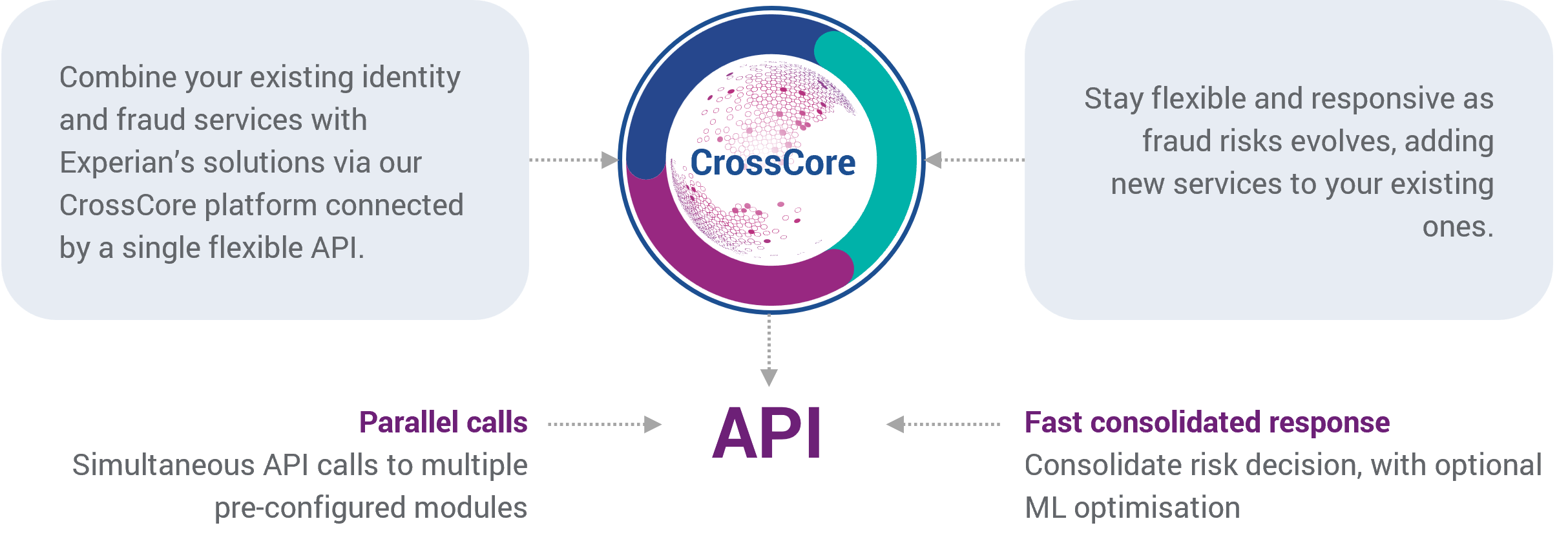
Our award-winning orchestration and decisioning solution CrossCore enables seamless integration of your existing identity and fraud services with Experian’s solutions, connected by a single flexible API.
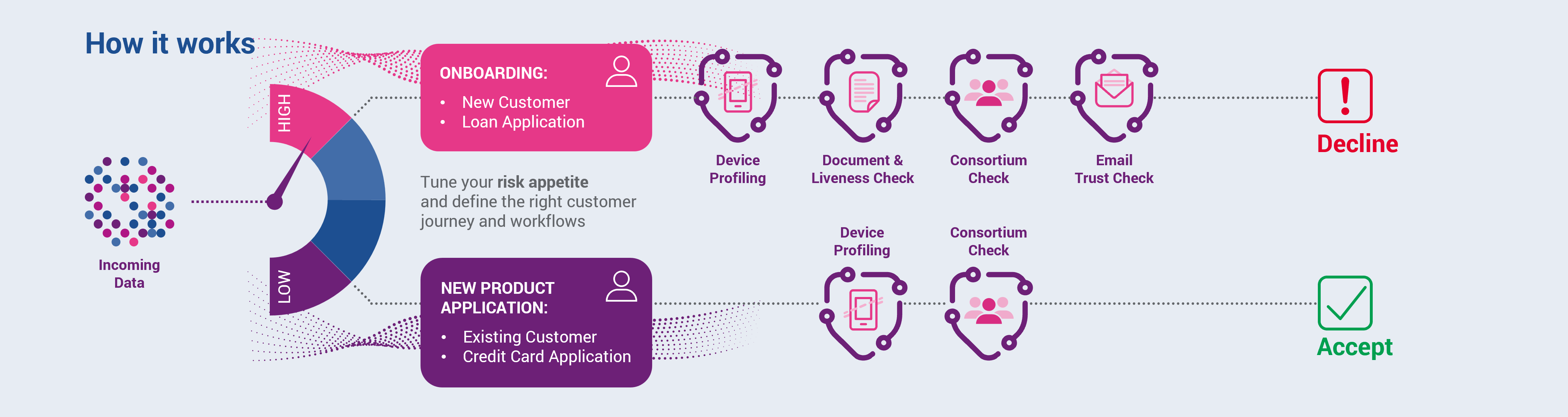
Orchestration dynamically calls relevant services in parallel or one after another based on pre-defined customer journey workflows. Tune your risk appetite and define the right customer journey and workflows from within our technology platform. Stay flexible and responsive as fraud risk evolves, adding new services to your existing ones as required.
Supported Use Cases
- Stolen identity applications
- Synthetic identity
- Age fabrication
- Impersonation
- ID-related data manipulation
- Account takeover
- Money laundering
- Bot attacks
- E-commerce fraud
CrossCore Decisioning
CrossCore decisioning provides a consolidated risk decision based on the high-level responses from the ID&F backing services called. This recommended decision can then be used by the client to support their referral strategy.
CrossCore machine learning combines the granular responses from the ID&F backing services called, along with the application data, to provide a more detailed view of the risk associated with an application. Clients are then able to use the risk score produced to tailor their referral strategy based on their risk appetite.
Document & Liveness Check
Device Profiling
Behavioural Biometrics
Email Trust Check
PEP and Sanctions Check
Your Internal Software
CrossCore Case Study
As UK credit provider NewDay grew its customer base, it faced an increasing number of fraudulent applicants.
To stop the fraudsters, NewDay added more application screening processes to its already stringent system.
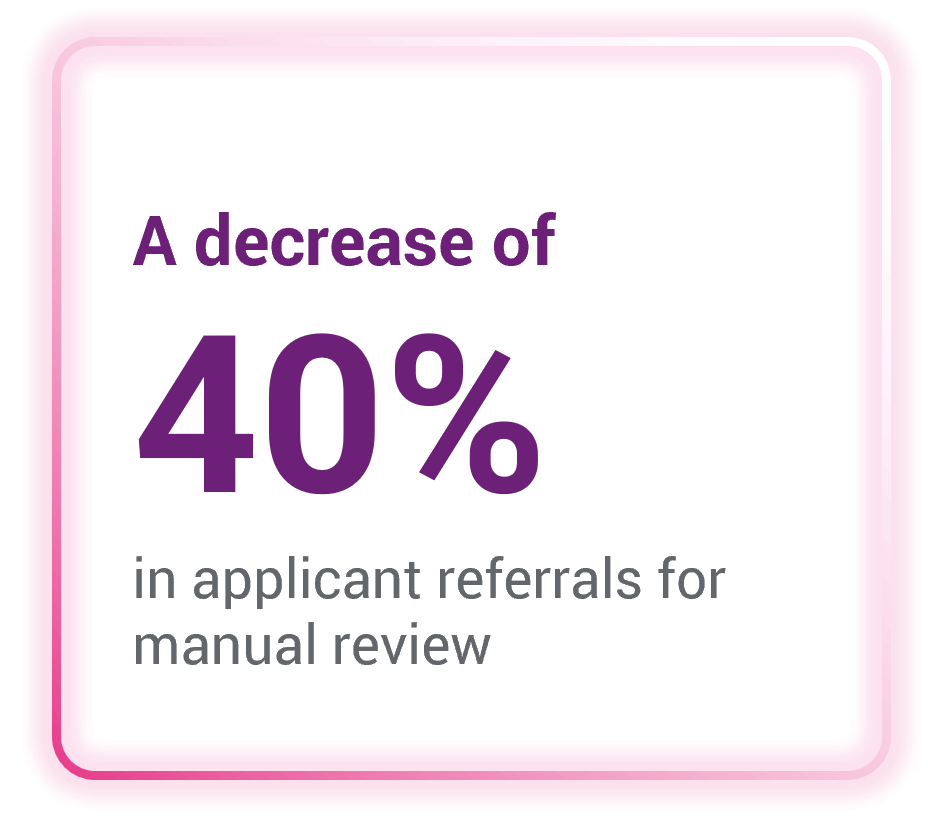
However, these additional checks delayed the application process for genuine applicants, generated more applicant referrals to be manually checked and lead to increased operational costs.
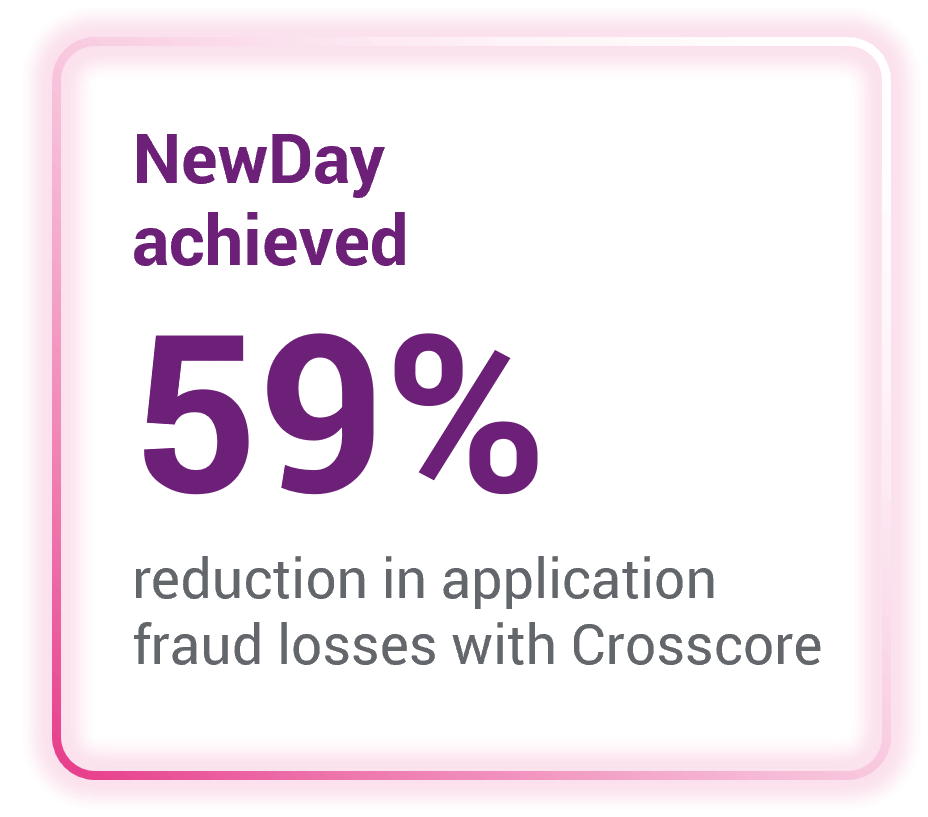
Through CrossCore, NewDay was able to identify and consolidate a wide range of risk alerts into a single assessment. For the first time, NewDay could leverage multiple data sources in one platform and use advanced analytics to make real-time risk decisions.
Without Machine Learning
Many fraud strategies look at each fraud service in isolation, generating a separate refer/accept decision after each service is called
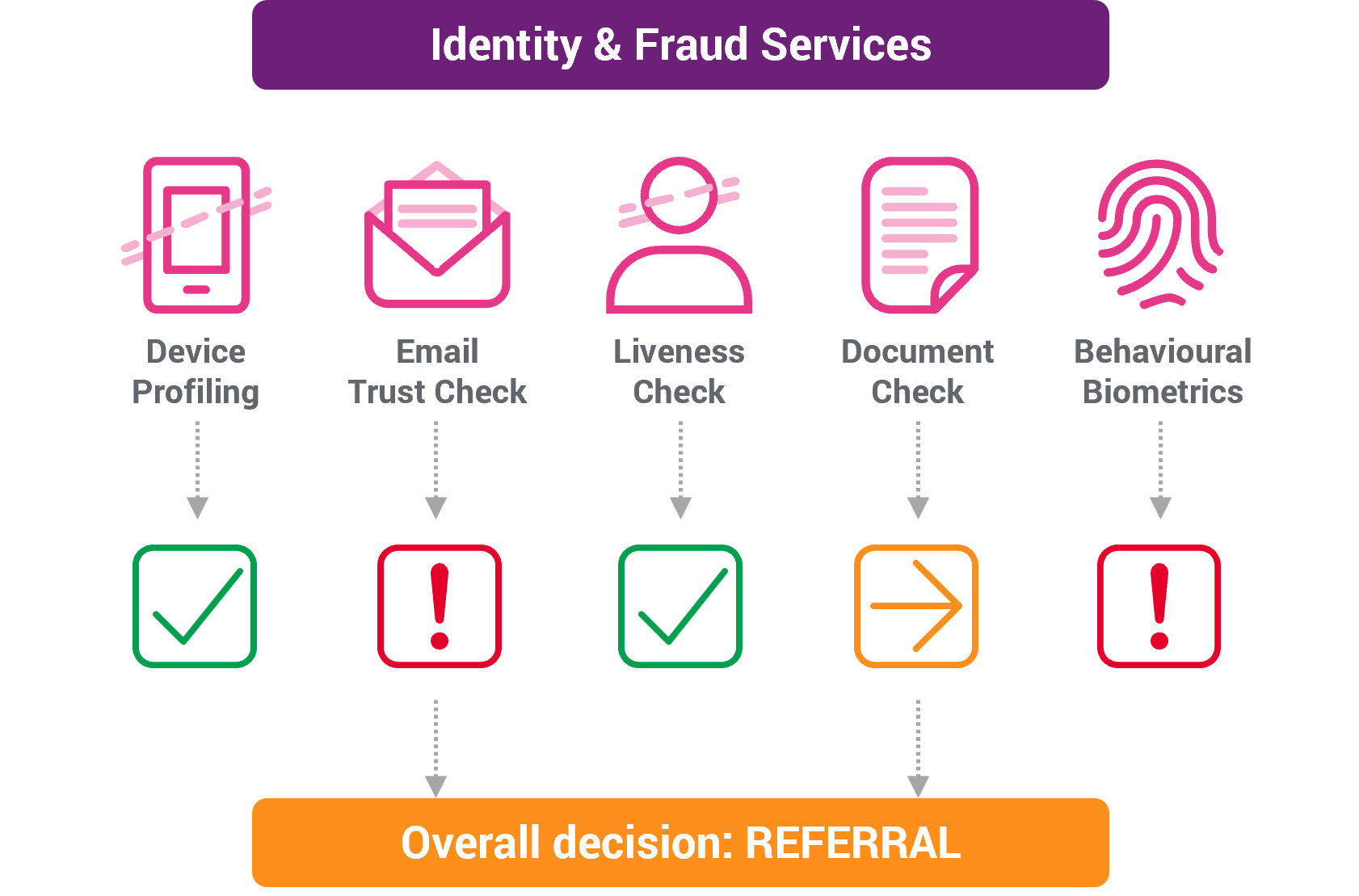
The overall decision of an application would be Refer if any one service indicated an increased fraud risk. This leads to higher false positives and does not take into account the overall risk of application.
With Machine Learning
With Machine Learning, data is combined at a much more granular level using the raw response data – rules, data counts and scores
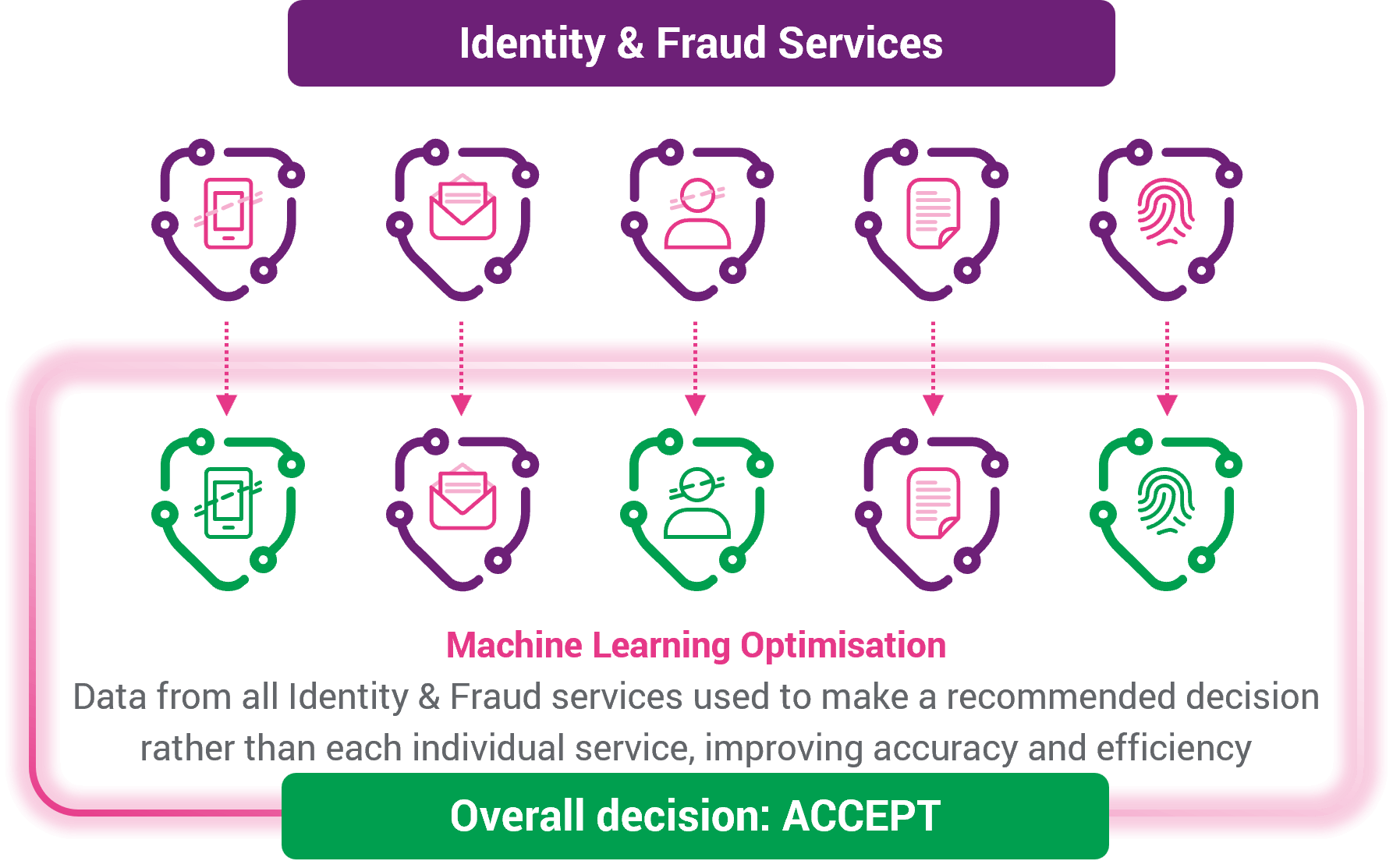
Decisions based on overall assessment of risk
Decision to refer or not is based on all the available data rather than human-defined combinations of decisions provided by individual identity and fraud services
CROSSCORE
Fraud Detection & Prevention
PLATFORM OF THE YEAR (Platinum), 2021
GLOBAL LEADER in NA, Europe,
APAC, LATAM and EMEA, 2023
RANKED 2nd OVERALL Juniper’s
Online Payment Fraud Market report 2023
CROSSCORE
OVERALL LEADER – Fraud Reduction
Intelligence Platform 2023
LEADER – IDC Enterprise-Wide
Fraud Solutions MarketScape
Fraud & Security
Innovation of the year
(Platinum), 2021
Aidrian
VVCM Credit Management
Innovation Award 2023
SEE IT Product of the Year
2023, SEE Innovation,
Technology and Sourcing Summit
CrossCore Watchlist Screening
LEADER –2024
Juniper AML Solutions Leaderboard
LEADER –2024
Quadrant Spark Matrix AML solutions