Behavioural Biometrics
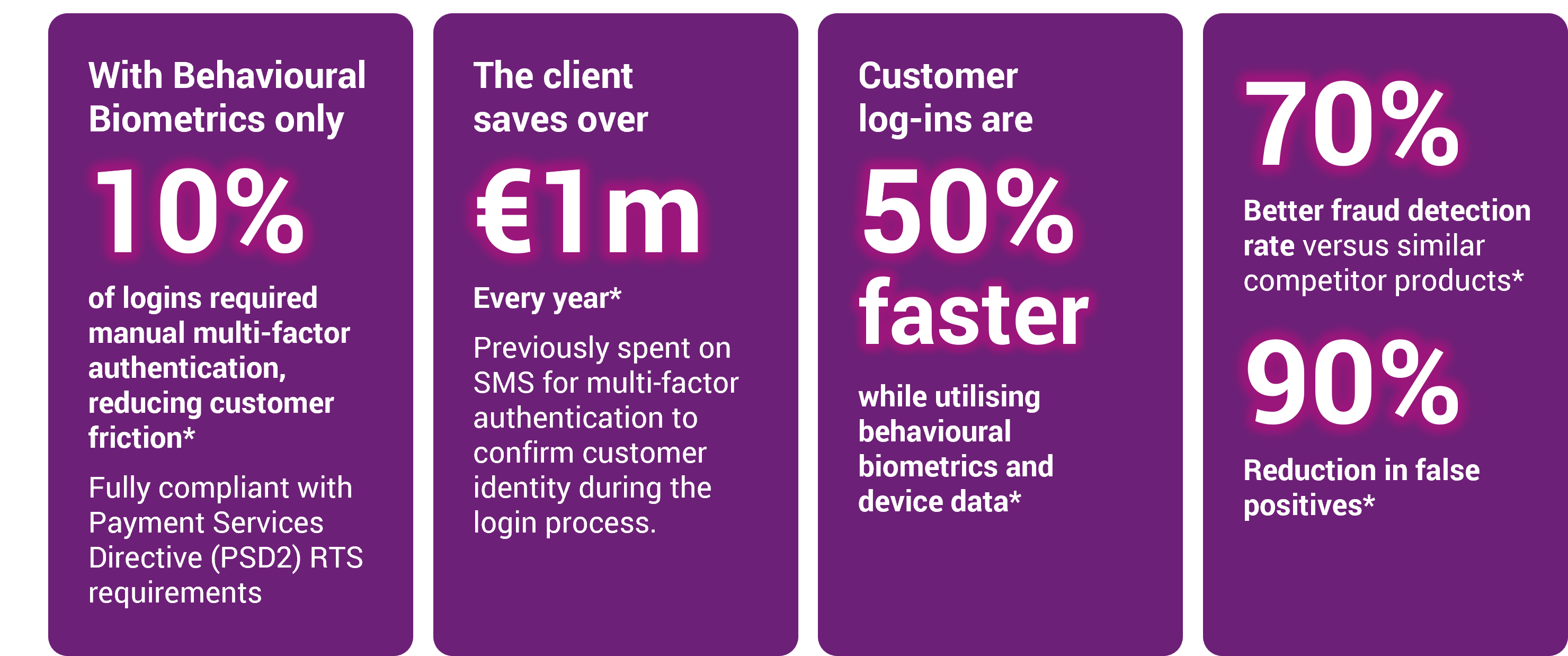
More organisations start adopting behavioural biometrics for fraud prevention due to its ability to significantly enhance security and provide a seamless user experience.
Physical biometrics are increasingly threatened by sophisticated deepfakes, so additional checks are required. Behavioural biometrics analyse unique patterns of user behaviour like typing speed and mouse or finger movements, making it harder for fraudsters to impersonate legitimate users. Sudden changes in behavioural patterns is a strong indicator of an account takeover attack. Behavioural biometrics can spot the signs of hard-to-detect APP fraud and money mules.
Supported Use Cases
- Stolen identity applications
- Synthetic identity
- Impersonation
- Bot detection
- Account takeover
- Money mules
- APP fraud
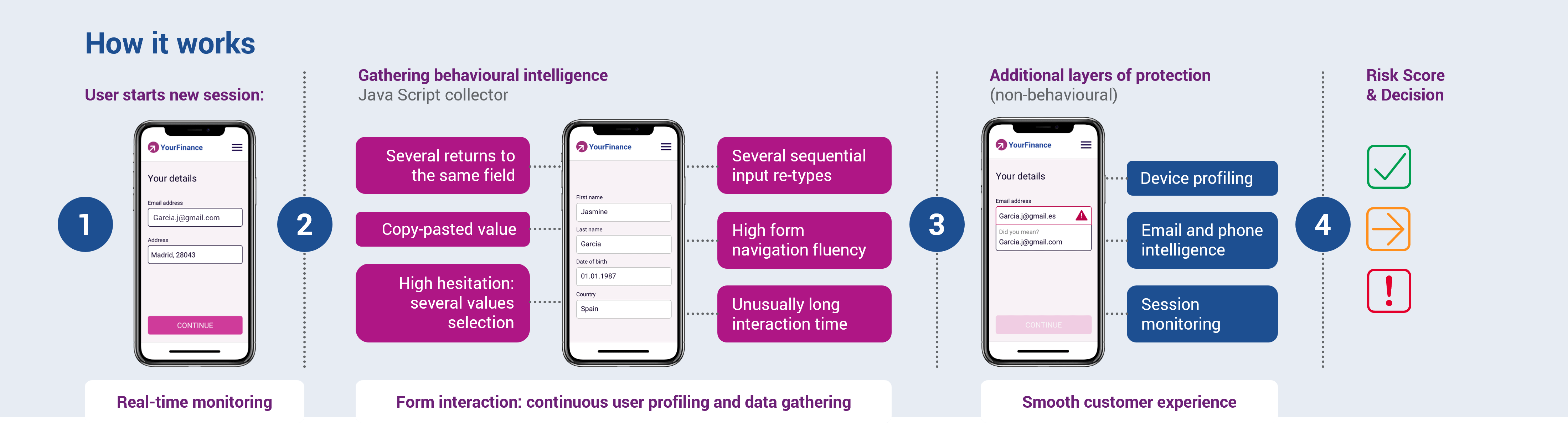
Behavioural biometrics can significantly strengthen fraud prevention measures and enhance user experience
Leveraging machine learning algorithms, behavioural biometrics systems can continuously learn and improve their ability to detect anomalies and increase accuracy. Plus, it can adapt to changes in user behaviour over time, such as changes in typing style due to injury or aging. This adaptability ensures that legitimate users are not unnecessarily locked out of their accounts due to changes in their behaviour patterns.